 Танкалар
 Энергия кристалдары
Танканың дауалау үҙенсәлектәре, Танка сәнғәте, рухи етәкселәр
Thangka Art: The Sacred History, Spiritual Legacy & Authentic Guide to Tibetan Buddhist Thangka Painting
09
Apr
Apr
Беҙҙең кристалдар һәм танҡалар коллекцияһын өйрәнегеҙ
 Беҙҙең кристалдар һәм танҡалар коллекцияһын өйрәнегеҙ
 Беҙҙең кристалдар һәм танҡалар коллекцияһын өйрәнегеҙ
The Origins of Thangka: A Mobile Shrine for Nomadic Tibetan Buddhist Faith
Thangka (pronounced “tong-ka”) traces its formal roots back to the 7th-century Tubo Kingdom, during the reign of Songtsen Gampo.
Historical records from the authoritative Tibetan Royal Chronicle document the earliest commissioned thangka works, created to spread Buddhist teachings across the vast Himalayan plateau.
For Tibetan nomadic communities, traditional thangka painting solved a critical spiritual challenge.
Unlike fixed temple murals, thangka artworks are lightweight, rollable, and effortlessly portable.
They quickly became a “mobile temple” that could be carried across grasslands, unrolled for daily prayer, and safely stored during long journeys.
Archaeological findings from the Dunhuang Mogao Grottoes confirm this core function of early thangka art.
Unearthed 10th-century thangka fragments feature the same core compositional rules and spiritual purpose seen in modern authentic thangka works.
This unbroken artistic and spiritual lineage is what sets Tibetan thangka apart from all other forms of religious art.
What Makes Thangka Sacred: It’s Not Art – It’s A Devotional Spiritual Practice
The sacredness of authentic thangka has never been rooted in aesthetic beauty alone.
Every step of its creation, from canvas preparation to the final brushstroke, is strictly guided by Tibetan Buddhist scripture and centuries-old ritual.
This is the defining line between sacred hand-painted thangka and mass-produced decorative thangka copies.
1. Thangka Painting Begins With Ritual, Not A Brush
Authentic traditional thangka creation is never a casual artistic process.
Every single step is bound by Tibetan Buddhist ritual and sacred canonical texts.
Before a master thangka artist picks up a single brush, they complete a strict purification process.
This includes days of fasting, mantra recitation, and ceremonial bathing to clear the mind and body of distraction, aligning their intent with the sacred teachings the artwork will embody.
I witnessed this unbroken ritual firsthand in a Regong artisan workshop in Qinghai, the heartland of Tibetan thangka heritage.
Artists here wake at 4am daily to complete formal meditation before they begin painting.
Even for a palm-sized pocket thangka, this pre-painting ritual is never skipped.
Every brushstroke is accompanied by silent mantra recitation, infusing the thangka with intentional spiritual energy.
2. Natural Mineral Pigments: Sacred Himalayan Gifts That Last A Millennium
One of the most remarkable features of authentic thangka is its unfading, luminous color.
This is made possible by 100% natural mineral and organic pigments, a tradition preserved in thangka painting for over 1,000 years.
Traditional thangka pigments are sourced directly from the sacred Himalayan landscape, each with its own spiritual symbolism:
- Lapis lazuli and turquoise for deep, tranquil blues, representing the purity of the Buddha’s teachings
- Cinnabar and red coral for rich devotional reds, symbolizing compassion and protective power
- 24k gold leaf and pure silver for luminous sacred highlights, representing enlightenment
- Malachite for vivid life-giving greens, symbolizing healing and spiritual growth
These natural mineral pigments don’t just create stunning, unmatched color.
They are considered sacred offerings to the deities depicted in the thangka, and can retain their full vibrancy for over 1,000 years.
The Tibet Museum’s permanent collection features 13th-century thangka works with pigments as bright and vivid as the day they were painted.
3. Unbreakable Sacred Rules: The Canon of Thangka Proportions
There is no arbitrary “creative freedom” in traditional thangka painting – and that is exactly what preserves its sacred integrity.
Every detail of a deity’s form follows strict, unchanging guidelines laid out in the Buddha’s Scripture on Image Proportions, a canonical text that has guided thangka artists for centuries.
A single millimeter of deviation in the size of the Buddha’s eyes, the length of the arms, or the shape of the sacred halo is considered a break from the sacred tradition.
This strict standard ensures that every authentic thangka is a faithful representation of Buddhist teachings, not an artist’s personal interpretation.
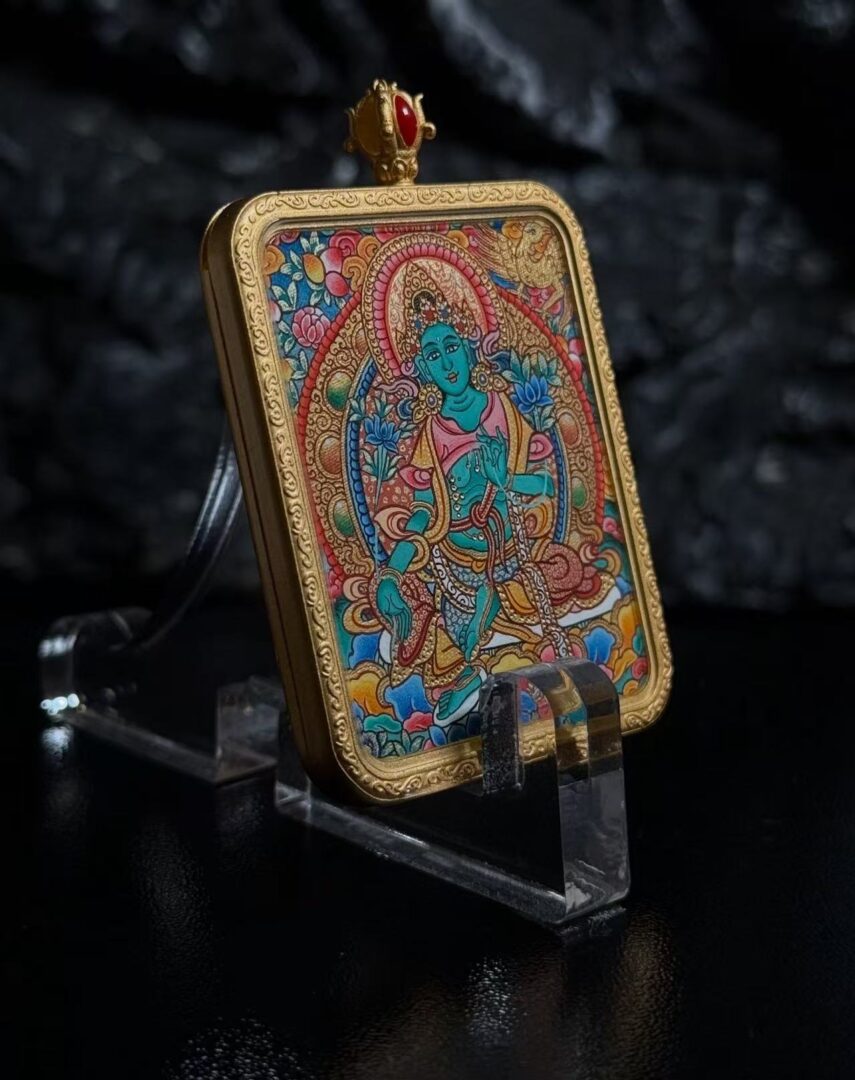
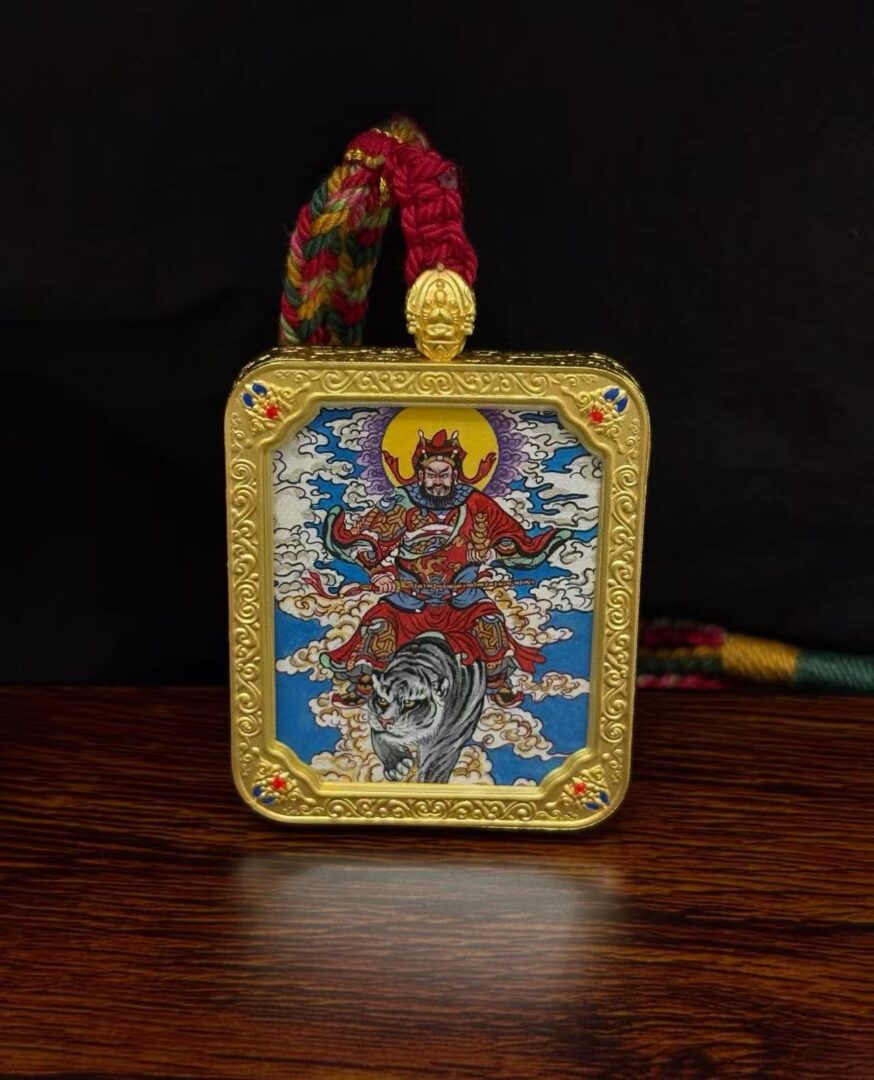
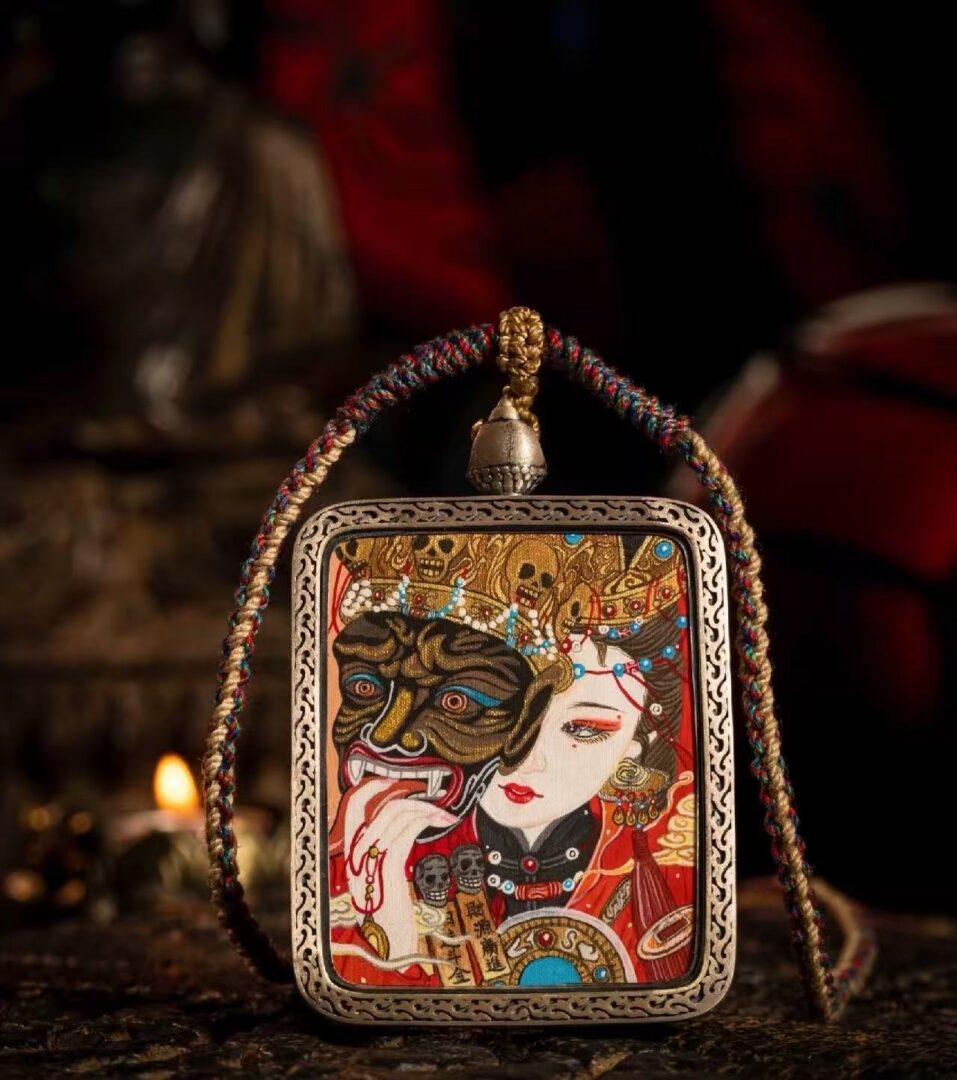
Even modern pocket thangkas – like the Green Tara, Zhao Gongming Wealth Deity, and Palden Lhamo half-face pieces in my personal collection – follow these canonical rules perfectly, despite their tiny 4x5cm size.
Thangka Through The Ages: From Temple Walls To Everyday Spiritual Practice
For centuries, thangka art was reserved for temple worship and royal patronage.
Large-scale thangka works were unrolled during major Tibetan Buddhist festivals, drawing tens of thousands of devotees to pay homage and receive blessings.
In 2006, Regong Thangka was inscribed on China’s National Intangible Cultural Heritage List, cementing its status as a protected traditional art form.
In 2009, Tibetan thangka painting was officially added to UNESCO’s Representative List of the Intangible Cultural Heritage of Humanity, bringing global recognition to this sacred craft.
This global milestone opened the door for accessible, authentic thangka for everyday spiritual practitioners around the world.
Today, pocket thangkas (housed in decorative, protective gau boxes) have become a beloved way to carry spiritual protection and devotional practice with you.
Unlike mass-produced printed thangka copies, hand-painted pocket thangkas retain the full sacred ritual and traditional craftsmanship of large temple thangka works.
They’re not just jewelry or home decor – they’re a personal portable shrine, a reminder of your intentions, and a piece of living Tibetan cultural heritage.
How To Choose & Honor An Authentic Thangka: Your Ultimate Practical Guide
With the global rise of mass-produced thangka copies, it’s harder than ever to find authentic, sacred hand-painted thangka.
Here’s what to look for, based on my 8 years of hands-on research, artisan collaborations, and personal thangka collection experience:
-
Verify it’s a real hand-painted thangka, not a printed copyPrinted thangkas have flat, uniform color with no visible brushstrokes or layered pigment.Authentic hand-painted thangkas have subtle texture, layered mineral pigment, and slight, intentional variations that show the master artist’s hand.
-
Confirm it uses traditional natural mineral pigmentsMineral pigments have a luminous, deep depth that synthetic dyes simply cannot replicate.They will not fade in direct sunlight, and have a soft, natural sheen when held up to light.Always ask the seller for full details on the pigments used in your thangka.
-
Learn about the thangka artist’s lineage and trainingAuthentic thangkas come with a signature and full background from the master artist who created it.Look for artists from traditional thangka lineages, with formal, multi-year training in the sacred craft of traditional thangka painting.
-
Honor the sacred tradition of your thangkaA genuine thangka is not just a decorative piece for your home.It should be treated with deep respect: kept in a clean, elevated place, away from direct sunlight and moisture, and never placed on the floor or in inappropriate spaces.
Final Thoughts: The Timeless Spiritual Power Of Authentic Thangka
Thangka’s sacredness never comes from its price tag or rare materials alone.
It comes from 1,300 years of unbroken artistic and spiritual lineage, the artist’s devout intentionality, and the centuries of Buddhist practice woven into every single brushstroke.
Whether you’re a dedicated Tibetan Buddhist practitioner, a collector of sacred Himalayan art, or someone drawn to the peace and intention of Tibetan spiritual tradition, an authentic hand-painted thangka is so much more than a painting.
It’s a bridge between the physical and spiritual worlds, a piece of living history, and a constant reminder of compassion, abundance, and inner peace.
Watch our 82-second behind-the-scenes video [here], to see a master Regong thangka artist complete a pocket thangka, from the first ritual brushstroke to the final 24k gold detailing.
Автор тураһында
With 8 years of deep research into Tibetan Buddhist art and thangka cultural heritage, I’ve visited over 20 traditional artisan workshops across Tibet and Regong (Amdo), curated non-profit thangka heritage preservation exhibitions, and am an accredited member of the China Thangka Art Association. My work focuses on preserving authentic hand-painted thangka craftsmanship, and helping global audiences understand the sacred meaning and history behind this ancient art form. You can connect with me on LinkedIn [here] for more insights into Himalayan spiritual art and traditional thangka painting.
Our Commitment To Authenticity & Integrity
Every thangka piece in our collection is 100% hand-painted by master artists from traditional Regong and Tibetan thangka lineages.
We use only traditional natural mineral pigments, follow strict sacred painting rituals, and provide full artist background documentation for every single piece.
We offer a 30-day authenticity guarantee, and lifetime complimentary guidance for caring for your thangka.
What Our Customers Say
“I’ve carried my Green Tara pocket thangka for 6 months now. The craftsmanship is incredible, and it’s become a core part of my daily meditation practice. You can truly feel the intention and care in every single detail.” – Sarah M., United States“As a long-time collector of Himalayan spiritual art, I’m blown away by the quality of these thangkas. The mineral pigments are stunning, and the artist’s adherence to the traditional canonical metrics is absolutely perfect.” – Michael T., California, USA

 English (New Zealand)
  English (United States)
  English (UK)
  Bengali
  Bashkir
  Estonian
  Chinese